Upcycled Woodchip Power Sources
Battery Recycling Programs

Carbon-Negative Fibre Materials

Upcycled Carbon Floor Tiles
Battery Recycling Solutions

Recycled Emission Oils

Hyper-Efficient Thermal Batteries
Sustainable Battery Cycles
Efficient Virtual Power Plants

Microplastic Particle-Transformed Designs

Low-Cost Battery Alternatives

eBike Battery Recycling Initiatives
Carbon-Powered Biotechnologies
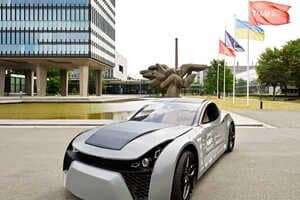
CO2-Capturing Electric Car Prototypes

Sustainable Battery-Swapping Stations
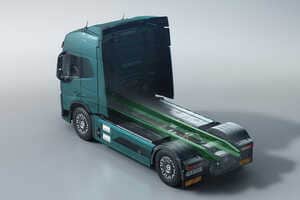
Fossil Fuel-Free Steel Materials

Recycled Automaker Fleets
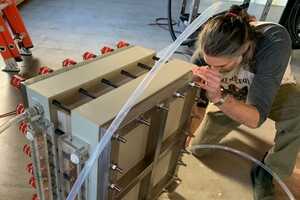
Oceanic Carbon Reducing Initiatives

Pollution-Converting Steel Plants

Compost-Powered Autonomous Cars

Fiber-Based Produce Packaging
CarbonScape is Using Discarded Woodchips in 'Biographite' for EVs
Colin Smith — October 29, 2024References: euronews & carbonscape

CarbonScape, a New Zealand-based company, has developed a process to convert discarded woodchips into biographite, a sustainable alternative to traditional graphite used in electric vehicle (EV) batteries. The company utilizes a method called thermo-catalytic graphitisation, which involves heating woodchip byproducts from the forestry industry to produce charcoal. This charcoal is then catalysed and purified to create high-quality graphite suitable for use in EV battery anodes. By using this process, CarbonScape aims to reduce the environmental impact of graphite production, which traditionally relies on fossil fuel-based feedstocks and emits significant carbon dioxide.
Biographite offers several advantages over conventional graphite, including a lower carbon footprint and the potential to reduce dependence on mined natural graphite and synthetic graphite derived from petroleum products. CarbonScape's biographite production process captures carbon that would otherwise be emitted if the woodchips rotted, making it a climate-positive alternative. The company plans to establish production facilities in Europe and the U.S., aiming to create localized battery supply chains and reduce reliance on Chinese graphite supplies. This innovative approach not only supports the transition to sustainable energy but also enhances supply chain security and resilience for the EV industry.
Image Credit:
Shutterstock