carboncapture
Article
Ocean-Forward CO₂ Removal Projects

Image Credit: David Prado Perucha/Shutterstock
Related Ideas
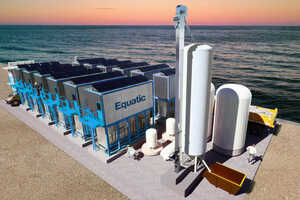





Captura Advances Its Direct Ocean Capture Technology
February 7, 2025 - By Georgia Wray Norsten
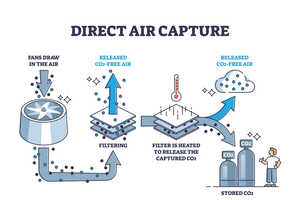
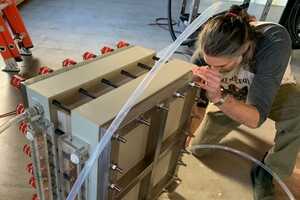
Captura has launched its latest direct ocean capture (DOC) pilot project in partnership with Equinor in Kona, Hawaii. This facility, capable of removing 1,000 tons of CO₂ annually, marks a crucial step in scaling DOC technology for commercial applications. Unlike direct air capture, Captura's electrodialysis-based system extracts CO₂ from seawater without chemical absorption, allowing the ocean to naturally absorb more CO₂ from the atmosphere, reducing emissions efficiently.
The Hawaii project builds on Captura’s previous pilot facilities in Los Angeles, demonstrating the technology's scalability and viability for large-scale deployment. The company is now developing a commercial plant expected to remove tens of thousands of tons of CO₂ annually. Captura’s innovation aligns with renewable energy, as its system can adapt to intermittent energy sources, making it a sustainable solution for global decarbonization efforts.
Beyond direct carbon removal, Captura’s technology has potential applications for repurposing decommissioned offshore oil platforms for long-term CO₂ sequestration. The company is exploring how its systems can integrate into existing infrastructure to enhance carbon removal efficiency further. Captura aims to reduce energy consumption and improve scalability by leveraging ocean currents in future iterations, reinforcing its commitment to a low-carbon future.
References: energyintel