Stretchable Eco-Friendly Batteries
Related Ideas




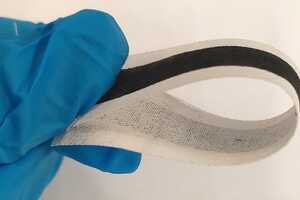





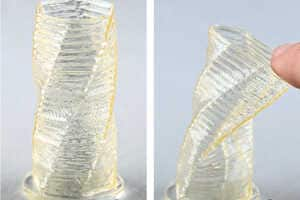



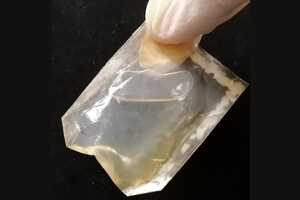
McGill researchers have developed a more eco-friendly, stretchable battery inspired by a classic children’s science experiment. Traditional electrodes made from lithium or silicon are hard to dispose of sustainably, so the team instead used biodegradable materials combined with acids mixed into gelatin, creating a flexible power source suitable for wearables such as health monitors, motion trackers, and VR haptic sensors.
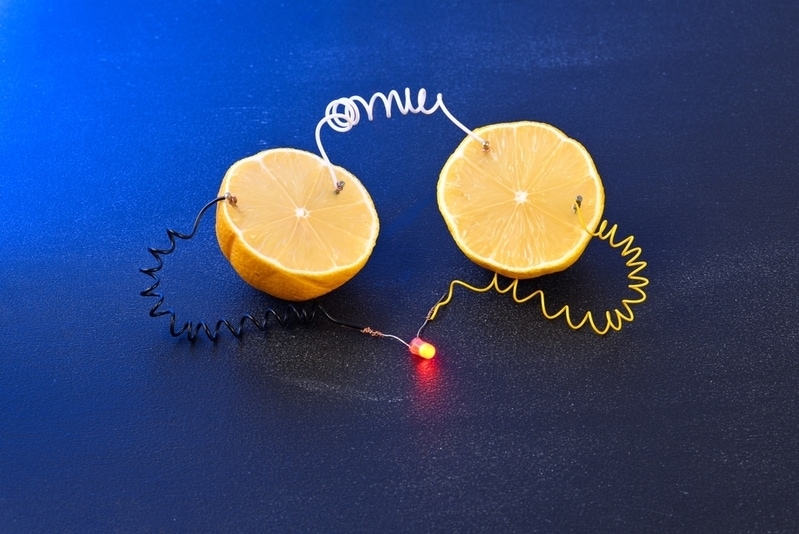
"Many people make a lemon battery as kids, where you connect a copper wire to a light. The lemon has enough ions to conduct electricity. I suggested Junzhi look at citric acid," said Sharmistha Bhadra, associate professor of electrical and computing engineering at McGill University.
In testing, the prototype delivered 1.3 volts—even when stretched to 80% of its limit—while maintaining stable performance. Early degradation studies showed that the magnesium electrode and electrolyte completely broke down within 58 days, with the molybdenum electrode degrading more slowly, demonstrating its potential as a greener alternative to conventional batteries.