carboncapture
Article
Eco-Focused Electrode Architecture Projects
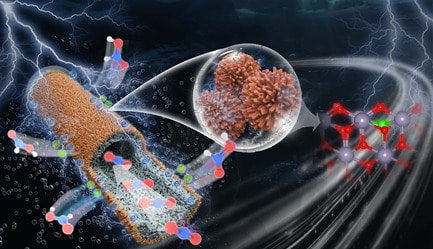
Image Credit: SARI
Related Ideas










Researchers Propose a Novel Hollow Fiber Electrode
November 13, 2025 - By Kalin Ned
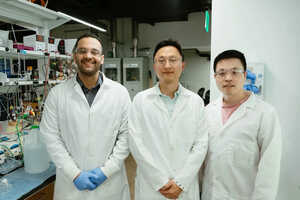
A research team from the Shanghai Advanced Research Institute of the Chinese Academy of Sciences — including Prof. WEI Wei, Prof. CHEN Wei, and Prof. SONG Yanfang — has developed a new type of electrode architecture intended to improve the efficiency of converting carbon dioxide into formate through electrochemical processes. Formate is considered to be a valuable liquid chemical.
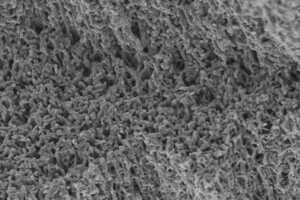
The innovation centers on a three-dimensional hollow fiber electrode composed of nickel, which is coated with a specially engineered chlorine-doped tin oxide material. This design aims to enhance the physical movement of CO2 gas to the catalyst's active sites and improve the underlying electronic interactions that drive the chemical reaction.
The objective of this electrode architecture is to maintain high selectivity and production rates for formate even when operating at industrial-scale electrical current densities — a key challenge that has hindered the commercial deployment of this technology.
References: english.saris.cn