Direct Air Capture's Role in Climate Strategy
Related Ideas















As climate targets tighten and emissions prove harder to eliminate, a new class of technologies has moved from up-and-coming to essential: carbon dioxide removal (CDR). Among them, direct air capture (DAC), which chemically extracts CO₂ directly from ambient air, has emerged as one of the most promising long-term solutions.
Scientific and policy consensus increasingly points to DAC as a critical, complementary solution for stabilizing the climate over the coming decades. Here are some key reasons:
1. It Removes Carbon Already in the Atmosphere
Unlike traditional climate solutions that reduce future emissions, DAC addresses a harder problem: existing atmospheric CO₂. DAC systems pull CO₂ directly from the air and can store it permanently underground, effectively reversing emissions. This makes it one of the few scalable tools for tackling “legacy emissions,” the trillions of tonnes already accumulated since the industrial revolution, and is critical because even if global emissions stopped today, warming would persist due to existing carbon concentrations.
2. It’s Essential for Net-Zero and Beyond
Virtually all climate models that limit warming to 1.5–2°C include some form of carbon removal and DAC is a leading candidate. Carbon removal technologies are required in all modeled pathways to meet global climate goals and DAC is considered a “critical negative emissions technology” for achieving those targets. Why? Because some sectors, like aviation, cement, and heavy industry, are extremely difficult to fully decarbonize. DAC allows us to balance out these unavoidable emissions, making meeting climate targets a more realistic goal.
3. It Can Address “Hard-to-Abate” Sectors
DAC is uniquely suited to offset emissions from sectors that lack scalable alternatives, with the ability to neutralize emissions from long-distance transport and heavy industry, where electrification or fuel switching is limited. In aviation, DAC can even enable carbon-neutral synthetic fuels, helping decarbonize a sector expected to grow significantly. This flexibility makes DAC not just a removal tool, but a systems-level enabler of decarbonization.
4. It Has a Small Land and Resource Footprint
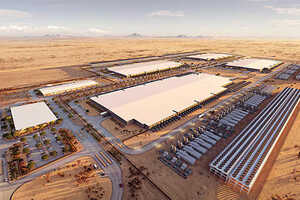
Compared to nature-based solutions like reforestation, DAC has key scalability advantages. It requires relatively little land and water compared to biomass-based carbon removal and can be deployed in diverse locations, including deserts or near storage sites, reducing competition with agriculture and ecosystems. This makes DAC especially valuable in a future where land use pressures are intensifying due to food, biodiversity, and urban needs.
5. It Offers Durable, Long-Term Storage
One of DAC’s biggest advantages is permanence. When paired with geological storage, captured CO₂ can be locked away for centuries to millennia. This durability distinguishes DAC from some natural solutions (like forests), which can be reversed by fires, disease, or land-use change. For long-term climate stability, permanence is critical.
6. It Can Scale with Technology and Cost Reductions
Today, DAC is expensive, but so were solar panels and batteries not too long ago. Costs are expected to decline significantly with technological improvements and scaling. Advances in materials, engineering, and deployment models are already improving efficiency and reducing environmental impacts. Historically, clean technologies follow steep cost curves once deployment accelerates, and DAC is widely expected to follow a similar trajectory.
7. It Complements—Not Replaces—Emission Reductions
DAC is not an excuse to delay cutting emissions. Instead, it plays a complementary role, providing a “backstop” solution for emissions we cannot eliminate. It also helps correct for overshoot scenarios where global temperatures temporarily exceed targets. Leading scientists increasingly argue that both rapid decarbonization and carbon removal strategies are necessary to avoid catastrophic climate outcomes.
8. It Enables a Future Carbon Management Economy
Beyond climate mitigation, DAC opens the door to a broader transformation. Captured CO₂ can be reused as a carbon-neutral feedstock for fuels, materials, and chemicals and introduces the concept of “carbon as waste”, similar to how society manages garbage or wastewater. In the long term, DAC could underpin a new industrial system focused on actively managing atmospheric carbon levels.
Challenges to Acknowledge
A balanced view is essential and DAC still faces real barriers, including high energy demand and costs, the need for clean electricity to maximize benefits and infrastructure requirements for transport and storage. However, these are engineering and scaling challenges, not fundamental limitations, and many analysts see them as solvable with sustained investment and policy support.
Key Takeaway
Direct air capture stands out because it does something no other major climate solution can do at scale: reverse emissions already in the atmosphere. In the long-term fight against climate change, that capability is indispensable.
Rather than replacing renewable energy, electrification, or conservation, DAC acts as a critical safety net and cleanup mechanism, one that may ultimately determine whether humanity can not just slow climate change, but begin to undo it.