5 Types of Carbon Removal You Should Know

Related Ideas















Different types of carbon removal are rapidly evolving from theory to real-world use, growing from small pilot projects into large-scale deals, corporate investments, and emerging global standards. Carbon removal isn’t a single solution, but a mix of approaches that strengthen natural systems or use technology to pull CO₂ out of the air.
Here are five key types of carbon removal and what they look like in practice today:
1. Afforestation and Reforestation
Planting new forests or restoring degraded land remains one of the most established carbon removal methods. Trees naturally absorb CO₂ and store it in biomass. A notable example comes from Mantec Technical Ceramics, which achieved carbon-neutral certification by measuring its emissions and offsetting them through an afforestation project in Nicaragua that has planted over a million bamboo clusters. These offsets are tracked and shared with customers, highlighting how brands can reduce their environmental impact while supporting global climate efforts.
2. Soil Carbon Sequestration
Soil is one of the planet’s largest carbon sinks and regenerative practices like cover cropping, reduced tillage, and composting increase how much carbon is stored underground, while improving crop resilience. A notable example comes from Varaha, which launched its Industrial Partners Program to convert agricultural waste like cashew shells into biochar using a controlled heating process that turns the material into a stable, carbon-rich substance. When added to soil, this biochar locks carbon away long term while improving soil health and reducing emissions, showing how waste can be transformed into a climate-positive resource.
3. Bioenergy with Carbon Capture and Storage (BECCS)
BECCS uses plants to absorb CO₂, converts them into energy, and captures the emissions for underground storage, resulting in net-negative emissions. This type of carbon removal is rapidly becoming one of the most commercially viable engineered solutions. One example gaining attention in this space is Stockholm Exergi, which is developing the world’s first large-scale BECCS (Bioenergy with Carbon Capture and Storage) project to capture and permanently store carbon emissions from energy production. Expected to remove up to 800,000 tonnes of CO₂ annually, the initiative highlights growing corporate support and shows how large-scale carbon capture technologies can play a major role in reducing emissions and advancing climate solutions.
4. Direct Air Capture (DAC)
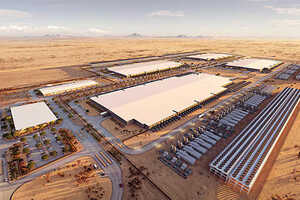
Direct Air Capture (DAC) uses machines to chemically extract CO₂ directly from the air, offering precise and measurable carbon removal. Increasingly, the technology is transitioning from experimental pilots to early commercial deployment, driven by major corporate backing and public-sector investment. Companies are funding more energy-efficient capture methods, while governments are supporting systems powered by low-carbon energy sources like renewables and nuclear. Together, these efforts signal a broader shift toward scaling DAC as a viable, though still costly, tool in the global carbon removal portfolio. A notable project in this space comes from 1PointFive, which is developing STRATOS, a large-scale carbon capture facility in Texas designed to remove up to 500,000 tonnes of CO₂ per year in its initial phase, positioning it as one of the world’s most ambitious DAC deployments to date.
5. Enhanced Mineralization (Enhanced Weathering)
This approach accelerates natural chemical reactions between CO₂ and minerals, locking carbon into stable solid forms for thousands of years. This category is gaining attention as a low-cost, highly durable removal pathway.
One example gaining attention in this space is Mati Carbon, which uses enhanced rock weathering by spreading crushed basalt on farmland, where it naturally reacts with rainwater to capture and store carbon over time. This low-cost, scalable approach not only supports carbon removal but also improves soil health and crop yields, helping farmers increase productivity while contributing to climate mitigation.
The Bigger Picture
Each method comes with trade-offs:
- Nature-based solutions → lower cost, co-benefits like biodiversity
- Engineered solutions → higher cost, but more measurable and permanent
What’s changing now is scale. New standards (like the EU’s 2026 certification for permanent removals) and billion-dollar corporate commitments are turning carbon removal into a real market and not just a climate concept.
Key Takeaway
The future of carbon removal is a portfolio approach, combining forests, soil, and advanced technologies like direct air capture (DAC) into a layered system that can realistically scale. Together, these solutions form a toolkit, rather than a single fix, for stabilizing the climate.